Tennis & Hockey
Classic 70s-style paddle action

Play Tennis & Hockey Online

Fast, simple and surprisingly competitive. Tennis & Hockey brings the spirit of classic 1970s paddle games to your browser with Tennis, Hockey, Hockey without forwards and a Squash-style wall mode.

▶ PLAY TENNIS & HOCKEY

Opens in a new tab · free · no install required

Choose Your Game

One simple control system, four very different ways to play. Switch modes and the rhythm of the match changes immediately.

Mode 01

Tennis

The pure paddle duel. One player on each side, one ball in motion and no room for hesitation. The longer the rally continues, the faster the game becomes. Catch the ball near the edge of your paddle and you can send it back at a much sharper angle.

Mode 02

Hockey

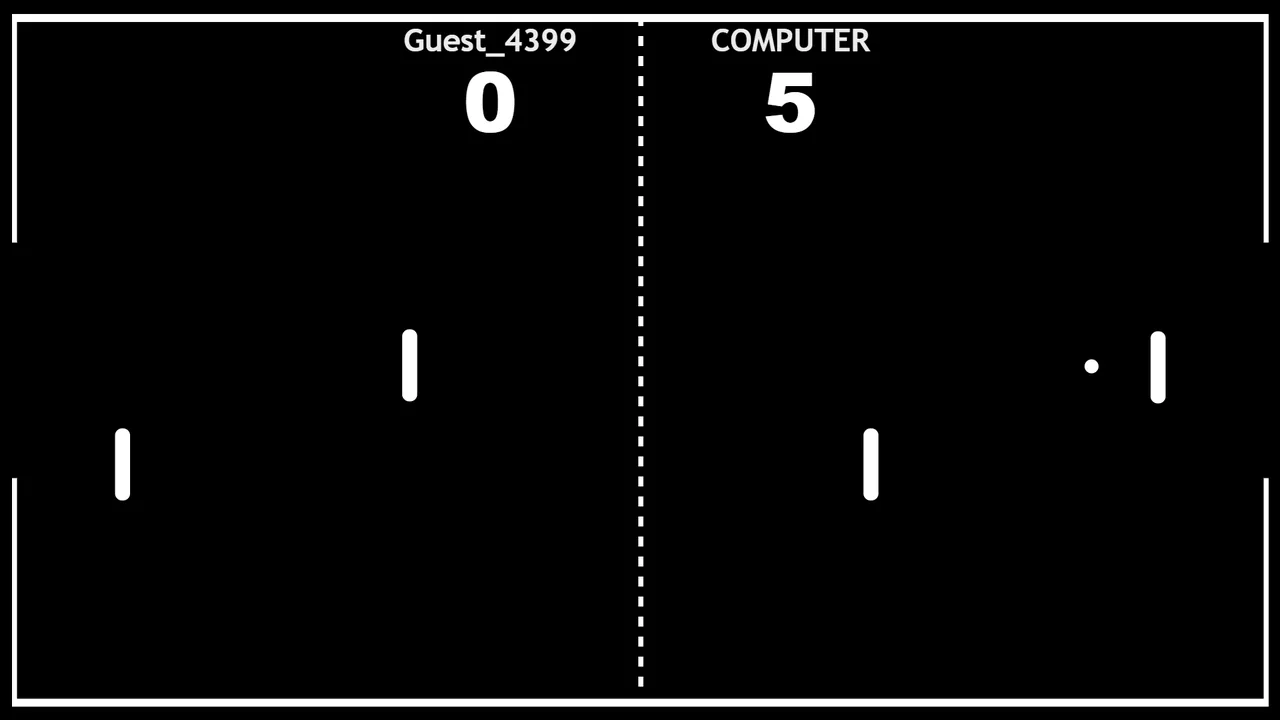
Each side has a defensive paddle protecting the goal and an attacking paddle positioned farther up the field. The result is a faster, more chaotic battle where the same ball can move from defence to attack in a split second.

Mode 03

Hockey Without Forwards

Remove the attacking paddles and the entire match opens up. With more space between defenders, long trajectories, rebounds and difficult goal angles become much more important.

Mode 04

Squash / Wall Game

Two players share one side and play through the wall. After one player returns the ball, the next return belongs to the other player. Timing and positioning matter more than ever.

Easy to Learn. Much Harder to Master.

Tennis & Hockey is built around the kind of controls that made early paddle games so immediate: move, read the angle, return the ball.

On desktop, players can choose between mouse and keyboard controls. On phones and tablets, touch controls keep the paddle visible instead of hiding it under your finger. Paddle size can also be changed between Small, Classic and Large, giving every match a different level of difficulty.

The game can be played on a classic dark court or a green court. In the green version, players can optionally use contrasting paddle colours so opponents are easier to identify at higher speeds.

Mouse or Keyboard
Touch Controls
Small / Classic / Large
Black or Green Court

Play Solo or Challenge Another Player

A quick solo match is easy to start, but multiplayer is where simple paddle games become personal.

In single-player mode you can face the computer and choose a difficulty level that matches your reaction speed. In multiplayer, another player takes the opposite side and every angle, rebound and missed return becomes part of a real head-to-head battle.

There are no long tutorials and no complicated controls to memorize. A new player can understand the objective almost immediately, while experienced players can learn how to use paddle position, return angles and increasing ball speed to create much harder shots.

The 1970s Paddle Game Revolution

Before giant game worlds, cinematic graphics and online tournaments, some of the most exciting electronic entertainment on a television consisted of a few bright shapes and a moving ball.

The breakthrough came in the early 1970s, when electronic paddle games showed that extremely simple rules could produce intense competition. Atari's Pong, released in 1972, became one of the defining video games of the decade and helped introduce a much wider audience to electronic gaming.

The concept was easy to understand: move a paddle vertically, return the ball and prevent the opponent from scoring. But the best versions added subtle depth. The point of contact on the paddle could influence the return angle, while longer rallies could increase the speed of the ball and reduce the time available to react.

Those small mechanical ideas transformed a very simple screen into a competitive game that could become dramatically harder within seconds.

Early paddle games proved something that is still true today: a game does not need complicated controls to create tension. It only needs rules that become more demanding as players improve.
From Tennis to Hockey, Squash and More

The paddle-game idea did not stay limited to one table-tennis format.

During the 1970s, arcade and home systems experimented with many variations. Tennis-style games placed one paddle on each side. Hockey-style games added extra paddles, goals and more complex attacking positions. Wall and Squash-style modes put players on the same side and forced them to play through a rebound surface.

The television itself became the playing field. A line could become a wall. A gap could become a goal. A second paddle could become a forward. Developers used very little hardware to create surprisingly different games from the same basic idea.

By the second half of the decade, dedicated paddle consoles and multi-game cartridges had helped turn the format into a recognizable family of games rather than a single title.

Why Were These Games So Addictive?

Because almost everything was visible. There was very little hiding what had happened. Miss the ball and you knew you missed it. Catch it near the edge of the paddle and the angle could change sharply. Keep the rally alive and the same exchange could become much faster than it was only a few seconds earlier.

Then add another human player. Suddenly every rally becomes a tiny contest of reactions, positioning and nerve. One more match can easily turn into ten.

That immediacy is the reason the basic paddle-game idea is still enjoyable decades later.

The Ball Gets Faster. Can You Keep Up?

Progressive speed is one of the most effective ways to stop a rally from becoming repetitive. Tennis & Hockey starts at a manageable pace, but sustained exchanges increase the pressure. Reaction time gets shorter, paddle positioning matters more and eventually somebody makes a mistake.

This creates natural tension without adding complicated rules. The same match can feel calm at the beginning and frantic only moments later.

Paddle Angles Matter

Not every return follows the same path. When the ball strikes closer to the centre of a paddle, the return is generally straighter. Contact farther from the centre produces a sharper angle.

That means moving the paddle is not only about reaching the ball. Good players can start thinking about where the ball will go next. A control system that looks almost primitive can still reward timing, positioning and anticipation.

Retro Spirit, Modern Controls

Tennis & Hockey takes inspiration from the simplicity of 1970s paddle games while being designed for modern browsers and devices. It can be played on desktop computers, laptops, tablets and smartphones.

Modern conveniences such as computer opponents, selectable difficulty, touch controls, paddle-size options and online multiplayer are added without turning the basic idea into something unnecessarily complicated.

The philosophy remains simple: see the ball, read the angle, make the return.

Frequently Asked Questions

Is Tennis & Hockey free to play?

Yes. The game can be played directly in your browser without installing software.

Can I play against the computer?

Yes. Single-player mode includes a computer-controlled opponent with selectable difficulty.

Does Tennis & Hockey have multiplayer?

Yes. You can challenge another player online in multiplayer mode.

Can I play on a mobile phone or tablet?

Yes. The game supports touch controls and is designed to adapt to smaller screens.

What game modes are available?

Tennis, Hockey, Hockey without forwards and a Squash-style wall game are available.

Can I change the paddle size?

Yes. You can choose Small, Classic or Large paddles.

Does the ball become faster during play?

Yes. Longer rallies can increase the speed of the ball and make extended exchanges progressively harder.

Is this the original Atari Pong?

No. Tennis & Hockey is an independently developed retro paddle game. It is not an Atari product and is not affiliated with or endorsed by Atari. Pong is referenced here only in its historical context as an important part of 1970s video-game history.

Ready to Play?

Choose your mode, choose your difficulty and see how long you can keep the rally alive.

Play Tennis & Hockey Now